
Start a St. Louis County Resident Search
There is no verified official list of every person in St. Louis County. Instead, choose a record that fits the question. An address can lead to the Assessor Property Search and County Land Explorer. A recorded property interest can lead to RecordEASE. An older Duluth address may be best served by a dated city directory, while a court, vital, or custody question has its own official system and access rules. Keep the source role in view: an owner field, a directory occupant, a permit applicant, and a court party are not interchangeable.
- Validate a street, city, and ZIP with USPS when an address is the starting point.
- Find the parcel or address point in the county Assessor search or Land Explorer.
- Use the parcel number or legal description in RecordEASE for recorded land instruments.
- For a past household, check the appropriate year in the Duluth library’s directory and index collections.
- When an existing public record is not online, ask the responsible county or city office for it under Minnesota law.
Write down the search date, exact spelling, location, and what the record actually labels. That small record trail is especially useful in a county that spans Duluth, the Iron Range, rural townships, lakes, and service centers.
Read St. Louis County Record Roles
A property result can establish a mapped parcel and assessment details. It does not establish everyone who lives there. A Recorder result can identify a grantor, grantee, trust, agency, or other party to an instrument. It does not turn that role into a present household. A printed directory reports what its publisher listed in that particular year. These distinctions prevent a residents directory search from joining unrelated people, addresses, and dates.
For a strong match, use two independent anchors that fit the period. A street and a directory year may support a historical address clue. A parcel identifier and a recorded legal description can support a land-record clue. A case search should be checked with court location, case number, filing date, and Register of Actions. If sources disagree, preserve the disagreement rather than deciding by guesswork.
St. Louis County Records Offices
County record work is spread across several offices. The Recorder and Registrar of Titles maintain recorded real-estate and local vital-record functions. The Assessor maintains property information. Elections staff route voter-status and polling questions, while the statewide Secretary of State controls the restricted voter-list process. Duluth, Virginia, Hibbing, Ely, and Cook service locations have different routing and hours, so select the office for the record needed instead of assuming one counter serves every request.
Recorder / Registrar of Titles
Duluth Courthouse
St. Louis County, Minnesota
Public terminal available at the Recorder’s office
St. Louis County Assessor
Duluth, Ely, Hibbing, and Virginia routes
St. Louis County, Minnesota
Duluth: 218-726-2304
County Elections & Voting
Auditor election services
St. Louis County, Minnesota
218-726-2385
The St. Louis County street directory explains the address-first chain in more detail. For records outside the county’s online tools, start with the custodian, identify the record type and date range, and ask whether inspection, copies, a terminal, or a formal request is the correct channel.
Search St. Louis County Parcels
The county’s public Assessor Property Search is updated daily. It accepts an address, and the parcel identifier is divided into CVT, plat, and parcel segments. Its advanced controls include last recorded sale date and price ranges, year built, gross area, style, unit count, city, and plat. A broad address fragment such as a house number or directional street piece can be more useful than a full exact string when the county’s formatting differs.
| Assessor control | Useful for | What it is not |
|---|---|---|
| CVT, plat, parcel | Opening a known parcel record | A resident-name index |
| Address text or city | Locating a property by place | Proof of current occupancy |
| Sale date or price range | Narrowing assessed property results | A complete title chain |
| Year built, area, style, units | Comparing property characteristics | A household roster |
The official Assessor Property Search shows the parcel and address controls used for a place-based lookup.
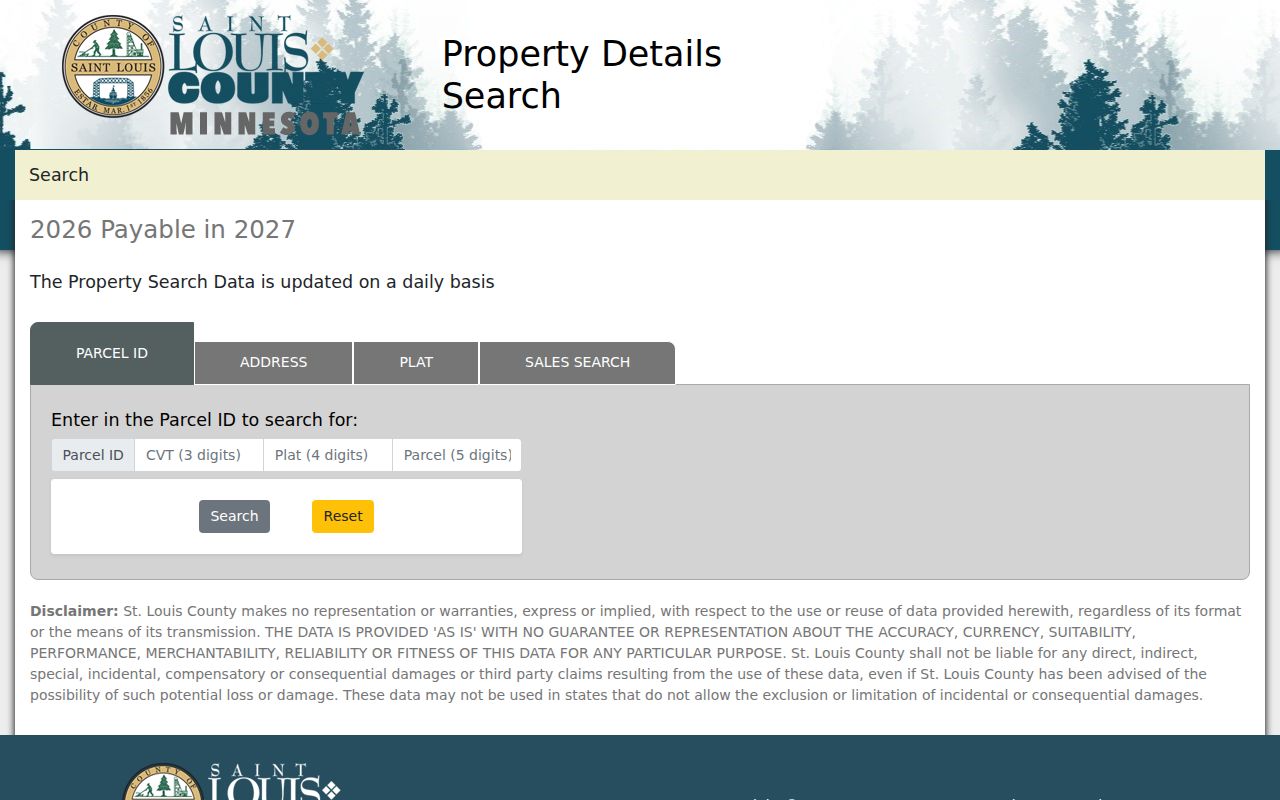
These controls are a practical first step for a St. Louis County residents directory address question, but their results still need a dated second source when the goal is historical or person-specific.
Map St. Louis County Addresses
County Land Explorer adds the spatial layer that a plain address search lacks. It can search PIN, address, lease PIN, subdivision plat, or Public Land Survey System information. Its layers include cadastral data, address points, road construction, zoning and land use, market sales and value, public safety, and historical aerial imagery. The Open Data service also publishes parcels, lots, blocks, subdivisions, road centerlines, voting precincts, polling places, school districts, and commissioner districts.
On a desktop workflow, Land Explorer offers parcel, plat, township-range-section, draw, measure, print, and identify tools. Mobile access is narrower. The county provides map data as is and does not guarantee it is current or accurate, so save the date checked and use the map to locate a property context, not to make a person claim.
Current St. Louis County Source Coverage
Current sources are organized by administrative purpose, not by a single population list. The table below helps select a starting point and explains the limit that should stay with the result.
| Current source | Role or field | Access channel | Key limit |
|---|---|---|---|
| Assessor Property Search | Parcel, physical address, assessment details | Public county web search and local assessor offices | Not an occupant list |
| Land Explorer / Open Data | Parcel geometry, address point, legal and district fields | Public map and GIS services | Spatial information is not household proof |
| RecordEASE | Grantor, grantee, PIN, legal description, recorded instrument | Paid online access, Recorder public terminal, local abstractor | Role in a document is not residence |
| Minnesota Voter Status | Election-service status workflow | Public statewide tool and county elections office | Not a public street roster |
| Duluth Library indexes | Older directory, obituary, death, and local-history clues | Online finding aids, Main Library, in-library databases | Each collection has its own dates and gaps |
A county jail roster is another separate, time-sensitive source. It updates hourly and is a custody snapshot, not a record of everyone in a community. State DOC, VINE, court, and registry sources have different scopes and must not be merged into one conclusion.
The county public-records gateway is the best starting point when the needed source is an office function rather than a web lookup.
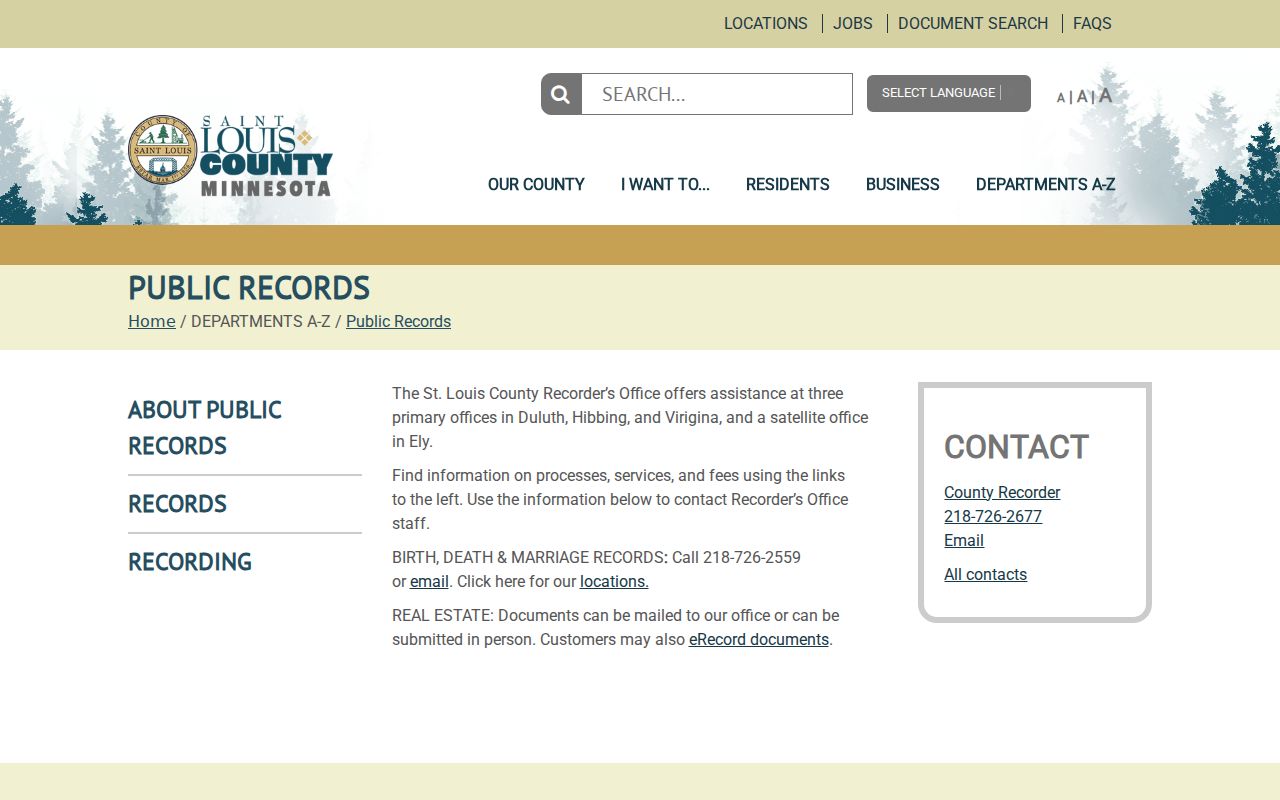
The gateway is useful for routing a St. Louis County residents directory question to the office that holds the record instead of treating unrelated systems as one database.
Trace St. Louis County Land Records
RecordEASE is the county’s recorded-document path. It supports grantor and grantee names, legal descriptions, document type or group, PIN, certificate number, deed book and page, tract index, and plat searches. Online indexes and images require a subscription. The Recorder’s public terminal is an alternative, and a local abstractor may be appropriate when a complex title trail needs professional help.
Coverage is not one continuous date range. The research notes Torrens images from 1902 forward, abstract images from October 1961 forward, and abstract documents fully indexed from the 1983 certification date. Search names in separate first- and last-name fields. Use no extra zeroes in document or certificate numbers, and use the plus sign only to expand related images or document information when the record is available.
The county’s official RecordEASE entry point marks the subscription boundary for online land records.
For a St. Louis County residents directory search, an instrument should be recorded as a document-side role and date, then corroborated with an address or dated directory before any broader conclusion.
Use St. Louis County Court Routes
Minnesota Court Records Online, or MCRO, is the official remote path for eligible court records. Case Search supports names, case number, citation number, attorney, date filed, category, status, and court location, including St. Louis County. Document Search uses a case number, while Hearing and Judgment searches have their own fields. Results are unofficial, some categories and party addresses are restricted remotely, and a local courthouse can provide more complete electronic or paper access and certified copies.
Vital events use a different route. Minnesota Department of Health is the statewide hub for birth and death certificates, subject to Minn. Stat. § 144.225 and requester eligibility. A marriage certificate comes from the county that issued the license, and a divorce decree comes from the district court that granted it. The Duluth Library indexes and MOMS can be useful finding aids, but they are not substitutes for a required certificate.
Duluth Records for County Families
For genealogy, estate questions, reconnecting relatives, or local-history research, the Duluth Public Library has a human-assisted route that the current portals do not replace. Its local-history resources link obituary and death indexes, birth and marriage material, newspapers, city directories, and library-access databases. A county genealogy request can also be more productive when it includes the full name, approximate event date, parent information, and place rather than a vague request for all records.
Many older archival materials are now held by UMD Archives and Special Collections, while the library remains important for directories, newspapers, and finding aids. Match the holding institution to the record type and respect any copy or publication-rights rule attached to the collection.
Check St. Louis County Civic Sources
Minnesota Voter Status and Pollfinder are public election-service tools. They should not be presented as a downloadable list of people on a street. Under Minn. Stat. § 201.091, access to the master list is limited, and a public information list requires a registered Minnesota voter’s certification for permitted use. Searchable internet publication, sale, loan, and unauthorized transfer are restricted. Safety withholding can also prevent a name from being published.
The county election office can route local status and polling questions. The official Elections & Voting page identifies that local channel.
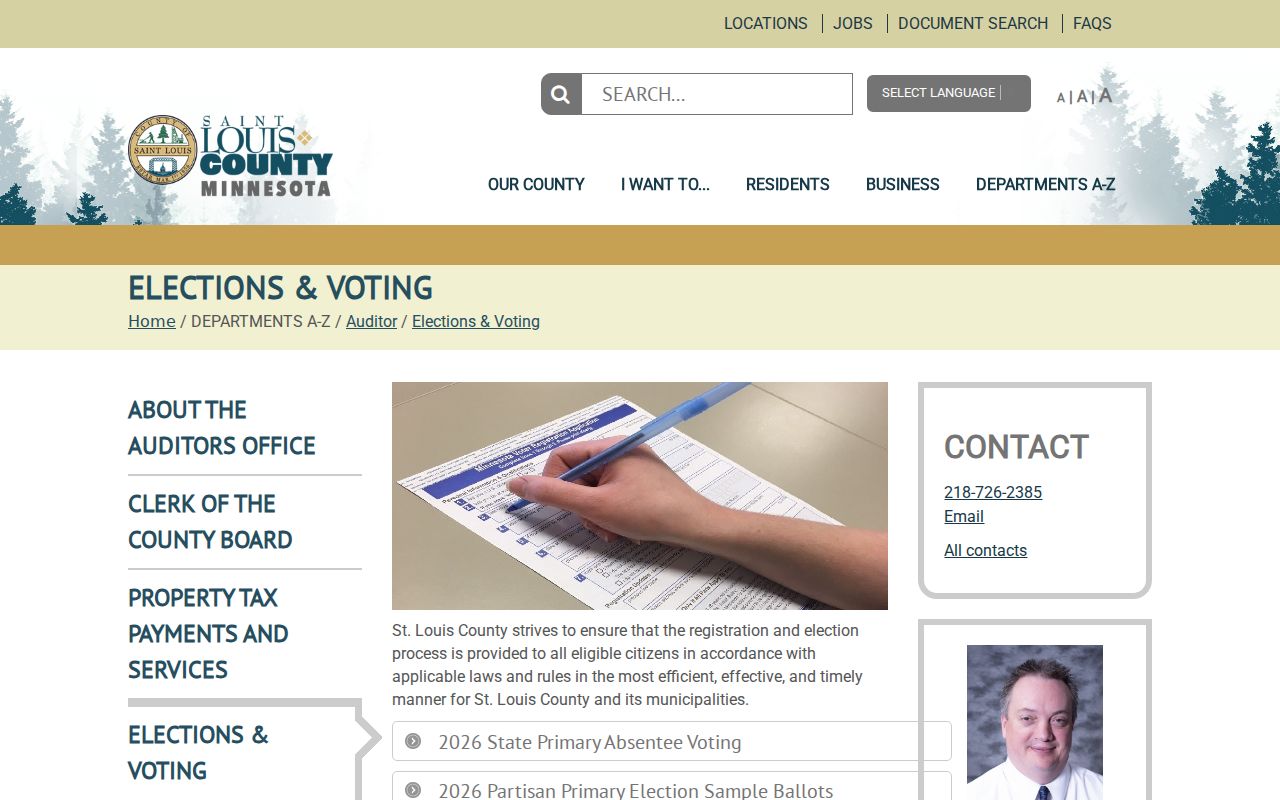
This county route belongs in a St. Louis County residents directory workflow only for civic service and lawful record access, not as a general resident listing.
Compare Official and Commercial Sources
Official sources identify a custodian, field meaning, access condition, and date. A commercial people-search category may be convenient, but it can combine old address, phone, and identity material without showing the original record or its classification. When a county record matters, return to the official portal, office, library, court, or archive and retain the source date.
| Source category | Strength | Question to ask |
|---|---|---|
| Official county or state record | Named custodian and defined fields | What does this exact field establish? |
| Court or vital-record channel | Formal access and certification path | Is remote access complete or is a certified copy needed? |
| Library or archive collection | Dated historical context | Which year, volume, page, and publisher apply? |
| Commercial people-search category | May suggest a lead | Can the claim be verified at its original source? |
A professional credential is another narrow source. The Minnesota health occupation verification tool searches name, city, county, occupation, credential status, discipline, and credential number. It identifies a credential record, not a general resident record.
The MDH occupation verification portal displays the official search categories.
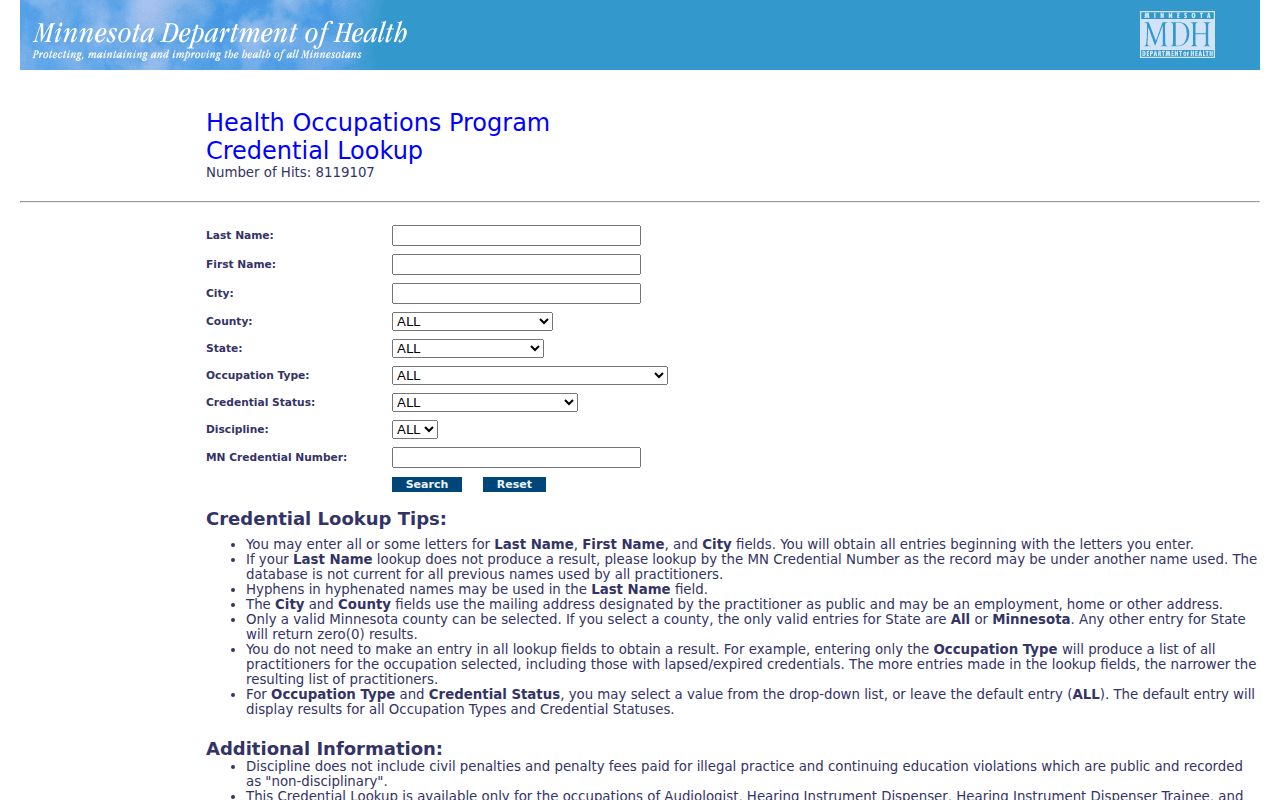
The health-occupation screen illustrates why each official source needs its own label in a St. Louis County residents directory research note.
Protect St. Louis County Data
Minnesota’s Government Data Practices Act, Minn. Stat. ch. 13, especially § 13.03, starts with public government data unless another classification applies. Inspection is free. Copies may carry actual costs, and an agency does not have to create a new record. A well-scoped request names the existing record, date range, whether inspection or copies are wanted, and the responsible authority. Duluth also provides a city data-practices route for city-held records.
- Parcel
- A county property unit identified by a PIN and legal or map fields.
- Physical address
- The location field for a parcel, which can differ from a tax mailing address.
- Index
- A finding tool for records. It may point to an image, book, request, or separate custodian.
- Directory entry
- A printed listing tied to the year and publisher that produced it.
Lawful use. Use county sources for personal, civic, family-history, property, or other lawful research. Do not republish protected addresses, reverse-engineer Safe at Home information, or use a record to stalk, harass, intimidate, or harm a person.
The Duluth data-practices resource explains the municipal request route.
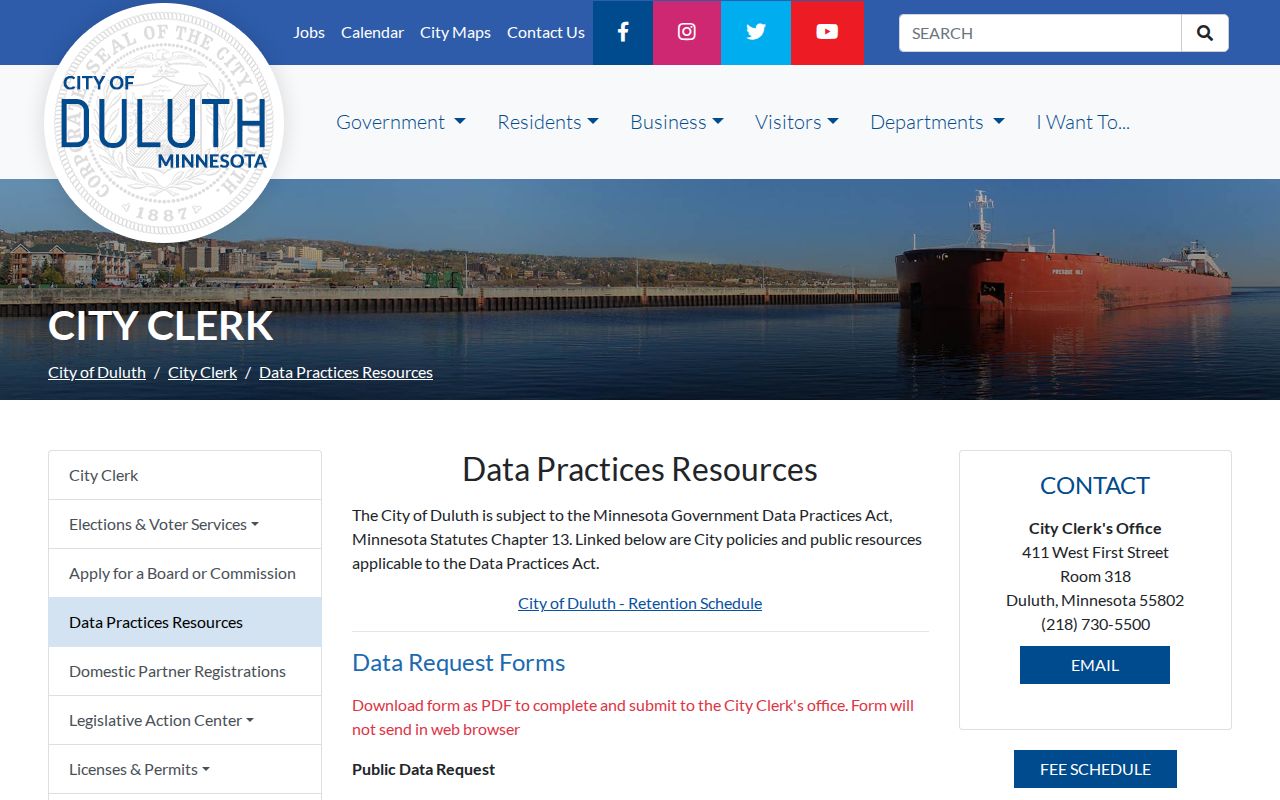
The city request page supports a focused, lawful St. Louis County residents directory inquiry when an existing city record is the right source.
Verify St. Louis County Matches
Before treating a result as reliable, compare name spelling, time period, location, document role, and another independent source. For an address, a parcel number confirms a mapped place, not a household. For a directory, note the publication year and printed occupation or address. For a court case, preserve the case number, court, status, filing date, and Register of Actions. For any fast-changing source, add the date and update cycle.
That last step matters for the county jail roster, which the county says updates hourly. A roster entry is not a complete court, custody, or identity history. Use official contacts and avoid using an absent result as proof that no record exists.
The St. Louis County jail search entry point states the roster’s county context.
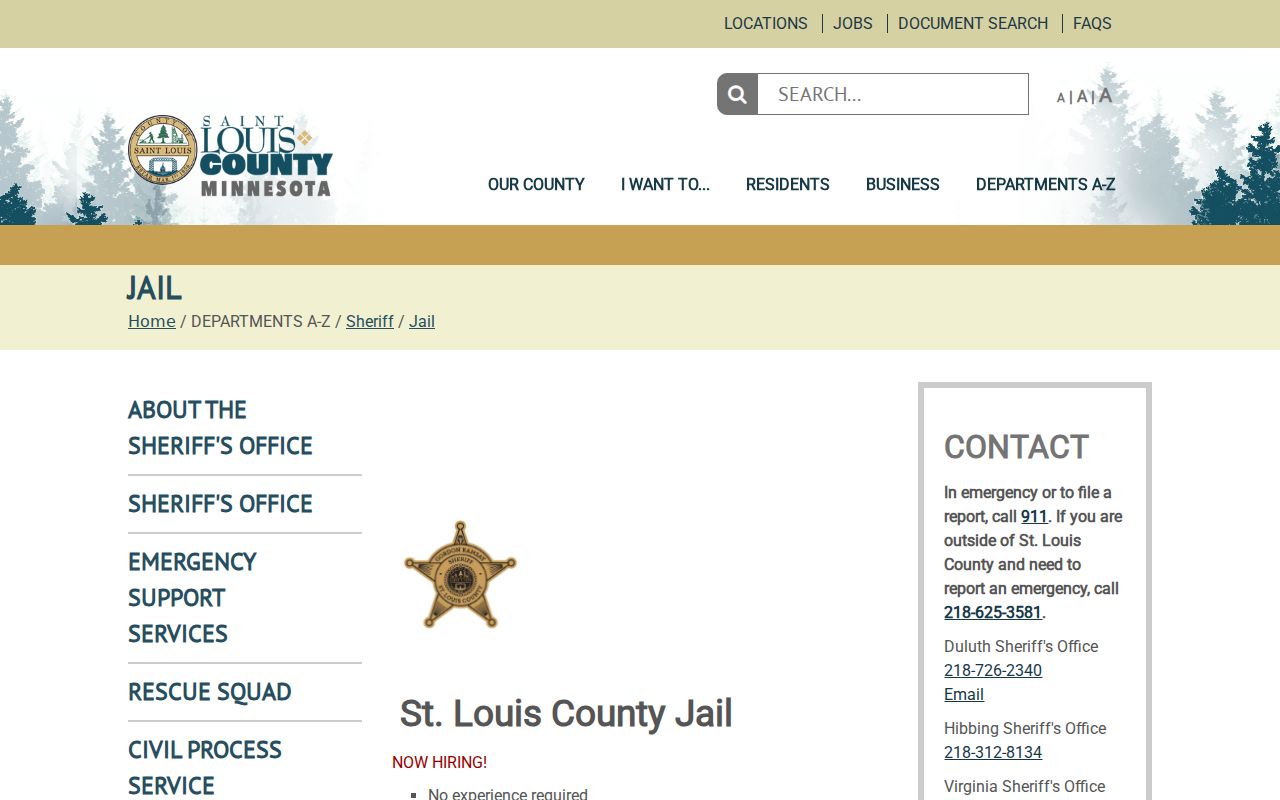
Its placement in a St. Louis County residents directory workflow is limited to the current county roster and its displayed update time.
Historical St. Louis County Directories
Duluth Public Library reports city-directory holdings from 1883 to the present, with 1884 through 1960 available at Main and through in-library Ancestry Library Edition. The 1930 volume is the first street-by-street directory. Earlier books are mainly alphabetical lists of residents and businesses, so an older street question often needs a name, map, title record, or other independent bridge.
The run has known gaps: 1919, 1933, 1945, 1947, 1949, 1953, and 2008. The later North Shore Room material is address-searchable, while earlier microfilm is not. A missing listing may reflect one of those limitations, a changed number or street name, or a difference between a postal address and a legal description. Record the exact volume, year, publisher, and page before drawing a historical conclusion.
The official Minnesota Voter Status tool is a separate current election-service check, not a substitute for a dated directory.
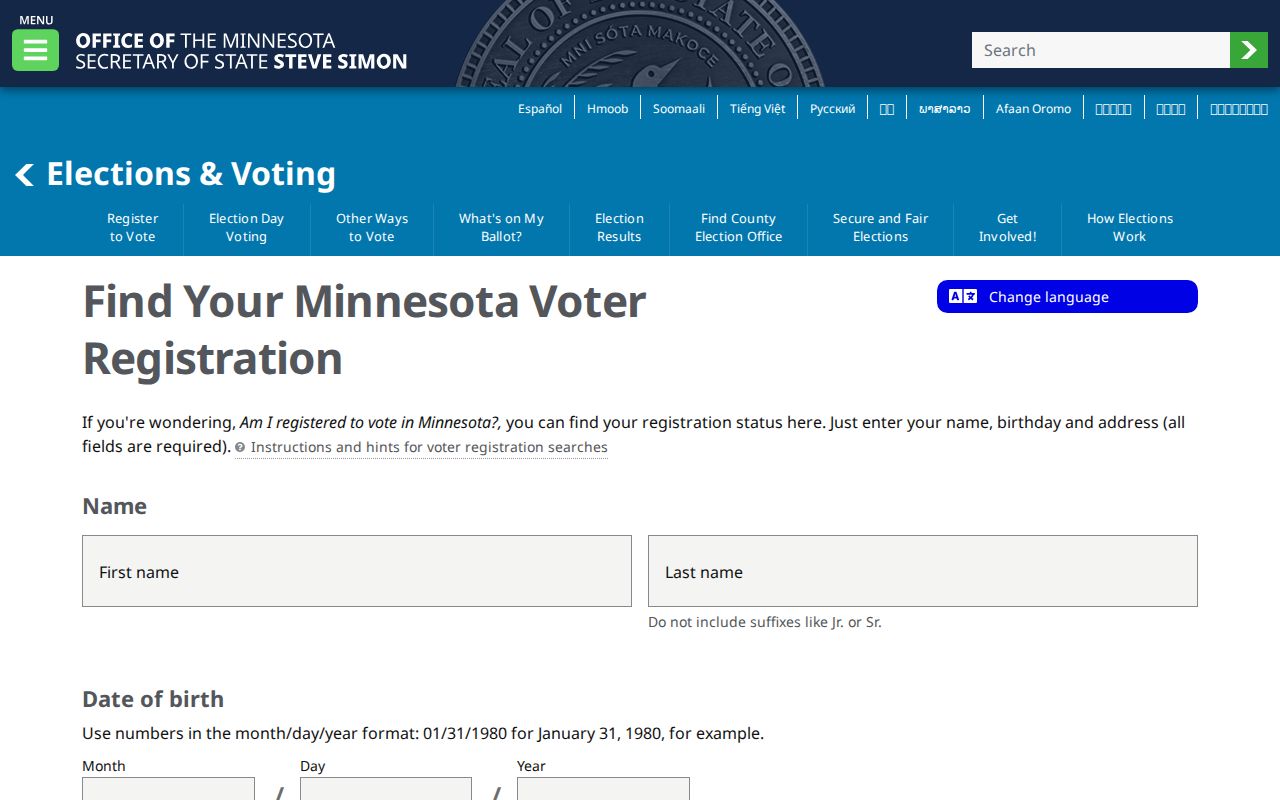
Keeping a modern voter-status service separate from historical directories protects the dates and purposes that make each St. Louis County residents directory source useful.