
St. Louis County City Directory Collections
Duluth Public Library describes its city-directory holdings as 1883 to the present. Its Main Library holdings and in-library Ancestry Library Edition make 1884 through 1960 especially useful for hands-on work. Treat that range as a holdings statement, not proof that every year is present. The library identifies several gaps, and catalog descriptions from other institutions use slightly different beginning and ending years. A careful St. Louis County city directory note records the exact volume rather than relying on a broad range.
| Collection | Years | Where Held | Access |
|---|---|---|---|
| Duluth city directories | 1883 to present stated; 1884 to 1960 noted | Duluth Public Library Main Library | In person; selected run through in-library Ancestry Library Edition |
| Duluth directory catalog runs | Duluth Directory Co. 1886 to 1949; Polk & Company 1950 to 1972 | City bibliography and local collections | Verify the title page, year, and publisher used |
| Digitized Duluth items | Examples include 1882 to 1883 and 1922 to 1923 | Minnesota Digital Library | Online image and metadata view |
| Superior directories | 1922 to present | Duluth Public Library, some bound with Duluth volumes | Cross-border clue, with city and year checked first |
Known Duluth gaps are 1919, 1933, 1945, 1947, 1949, 1953, and 2008. A gap is useful information. Check the preceding and following volumes, then use an obituary, newspaper, census, map, or another dated source instead of inventing a continuous listing.
Duluth City Directory Library Access
The Duluth Public Library genealogy service identifies the Main Library at 520 W Superior Street and lists Ancestry Library Edition as an inside-the-library resource. That access matters because the service includes census, passenger, vital, military, family, and local-history materials alongside the directory shelf. A library visit also allows the researcher to compare a volume’s title page and abbreviations rather than relying on a copied citation.
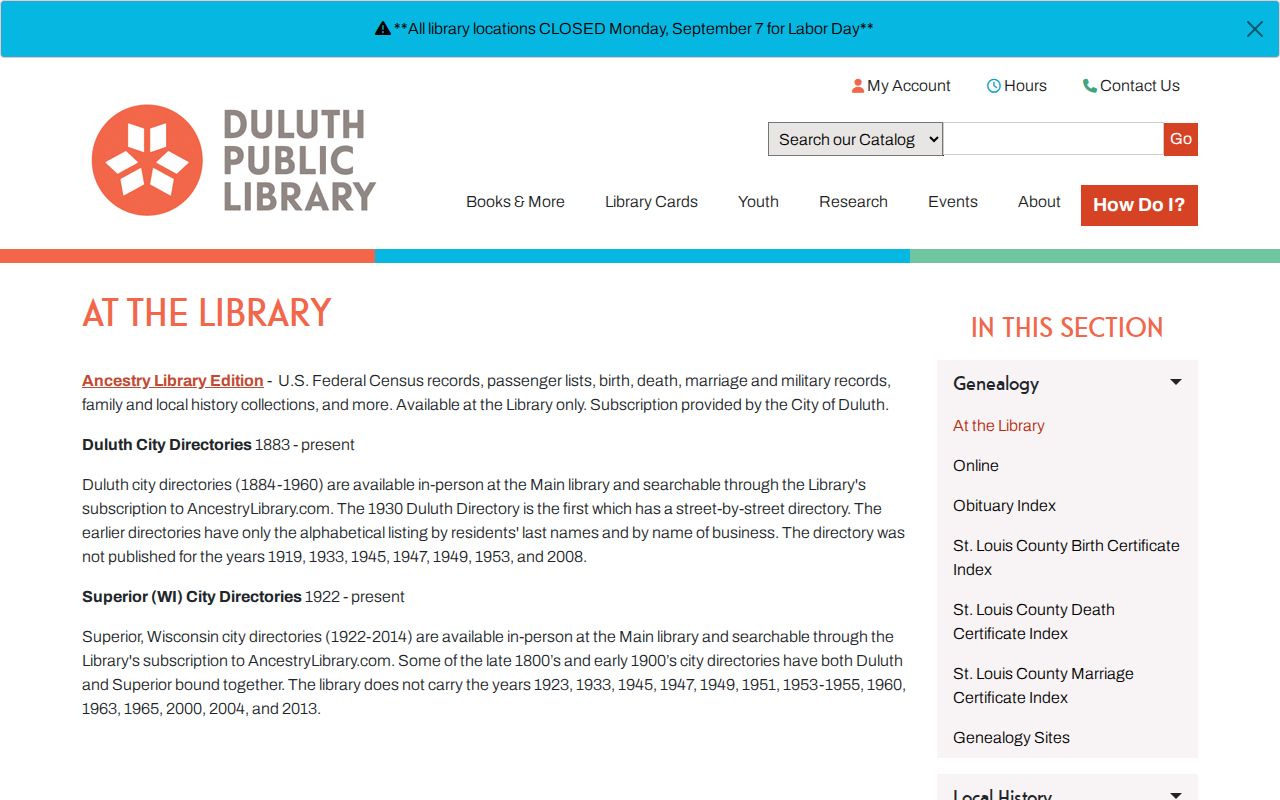
The library view supports the distinction between its local holdings and databases available only while visiting. Call or review the library’s current information before making a special trip, since collection access can change. Earlier books are principally alphabetical resident and business lists, while later North Shore Room material is address-searchable.
St. Louis County City Directory Year Gaps
The pivotal local change is 1930, the first Duluth volume described as street by street. Before that point, a person or business name may be found in alphabetical order without supplying the direct address path expected from later books. Starting with 1930, a street can provide an address-first route. That is a change in the collection’s arrangement, not a claim that every person or address was printed.
| 1882 to 1883 | Minnesota Digital Library has a digitized Duluth item with title-page information. |
|---|---|
| 1886 to 1949 | City bibliography attributes a Duluth Directory Co. run. |
| 1930 | First documented Duluth street-by-street volume in the local research. |
| 1950 to 1972 | City bibliography attributes a Polk & Company run. |
| 1882 to 2002 | UMD house-history guidance describes local directory holdings roughly across this span, with missing volumes. |
A publisher change can change coverage and abbreviations. Cite the catalog title, publisher, year, collection, and page or image. Do not silently blend entries from different runs into one household timeline.
Reading a Duluth City Directory Entry
An entry must be read as a dated printed statement. The local research supports recording the person or business name, street or address when present, occupation or classification, household or business note, abbreviation, and page image. It does not provide a text-inspected example entry or a verified abbreviation key, so unfamiliar marks should be preserved rather than expanded from guesswork.
| Name or business | Copy the spelling printed in that volume, including initials. |
|---|---|
| Address | Record the street, number, direction, and city exactly when the entry provides them. |
| Occupation or classification | Keep the wording as printed, especially where publishers changed. |
| Household or business note | Describe the stated role without turning it into proof of relationship or current residence. |
| Page and collection | Save the title, year, publisher, page or image, and collection URL. |
- Criss-cross section
- A street-ordered portion of a later directory that helps move from an address toward printed occupants or businesses. The 1930 street listings are the documented local milestone.
- Householder index
- A working description for an alphabetical household-oriented listing. Confirm the actual volume’s arrangement before calling it an official index title.
- Abbreviation key
- The publisher’s explanation of shortened terms. Photograph or transcribe it from the same volume when available, and do not supply missing meanings.
Digitized St. Louis County Directory Books
Minnesota Digital Library’s 1922 to 1923 Duluth directory is a named digitized example from R.L. Polk & Co. Its metadata describes alphabetical firms and private citizens, classified trades and professions, and civic and institutional listings. That description makes the item a strong starting point for a historical name or business clue, but it is not a current resident file.
Duluth Library genealogy indexes provide the local index view shown here.
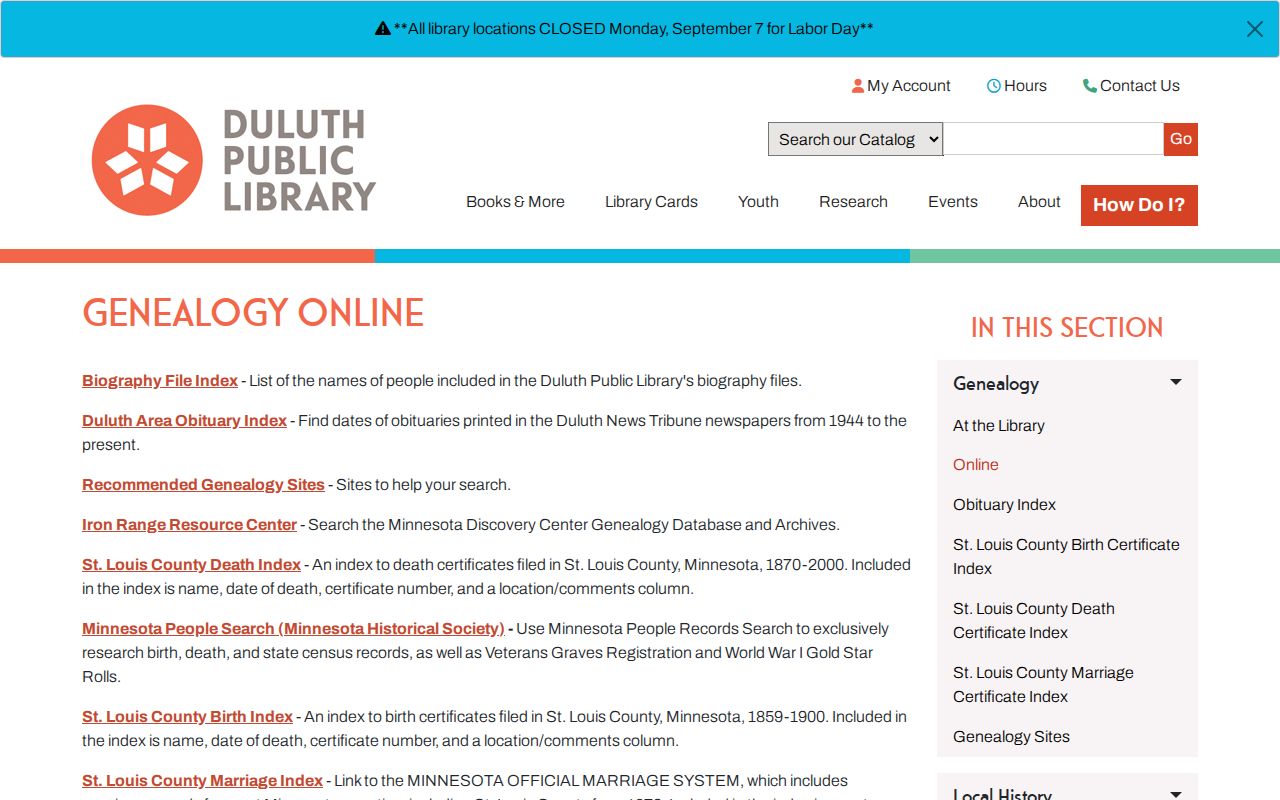
The library’s online genealogy indexes complement a digitized volume by helping locate dates, obituary references, and death-index entries. They remain finding aids. The original newspaper, certificate, directory page, or archive record supplies the source-specific confirmation.
1930 St. Louis County City Directory Shift
The 1930 street-listing break is a useful local research rule. For a post-1930 Duluth address, test the street section and then compare an alphabetical listing in the same or a nearby year. For a pre-1930 address question, work from the person or business name, a map, a legal description, or an independent street clue because the early microfilm is not address-searchable.
If a modern address does not appear, try a street-name or number change, a historical map, the alphabetical section, and the parcel’s legal description before treating the absence as meaningful. County research did not locate one official historical renumbering table. A map can explain a changed footprint or street pattern, but it does not identify a resident by itself.
Trace Families With City Directories
For family history, begin with a known name, place, or approximate year. The County genealogy route can combine a full name, approximate event date, parent name, nationality or place, directories, and certificates. That human-assisted route is useful when a library index offers only an incomplete clue, and separate research charges may apply.
- Locate the closest available directory volume and record its title, year, publisher, page, and exact wording.
- Compare the next available volume in each direction, marking a known missing year rather than filling it with an assumption.
- For 1930 and later, test the street listing against the alphabetical entry. For earlier years, use maps or a name-based route.
- Pair a directory year with the appropriate released federal census, then test address or family details against a dated newspaper or local index.
- Use the Duluth obituary and St. Louis County death indexes as leads, then seek the underlying certificate, newspaper, or archive when it matters.
A directory disappearance can reflect a move, death, omission, changed spelling, changed street, or a missing volume. Modern record questions belong to the purpose-specific St. Louis County resident lookup routes, not to a historical directory entry alone.
St. Louis County City Directory Archives
The St. Louis County Historical Society archives says that most archival materials are now held by UMD Kathryn A. Martin Library Archives & Special Collections. Its collection trail can add manuscripts, photographs, and oral histories to a city-directory question. Copying and publication rights vary, so distinguish private study from any broader use.
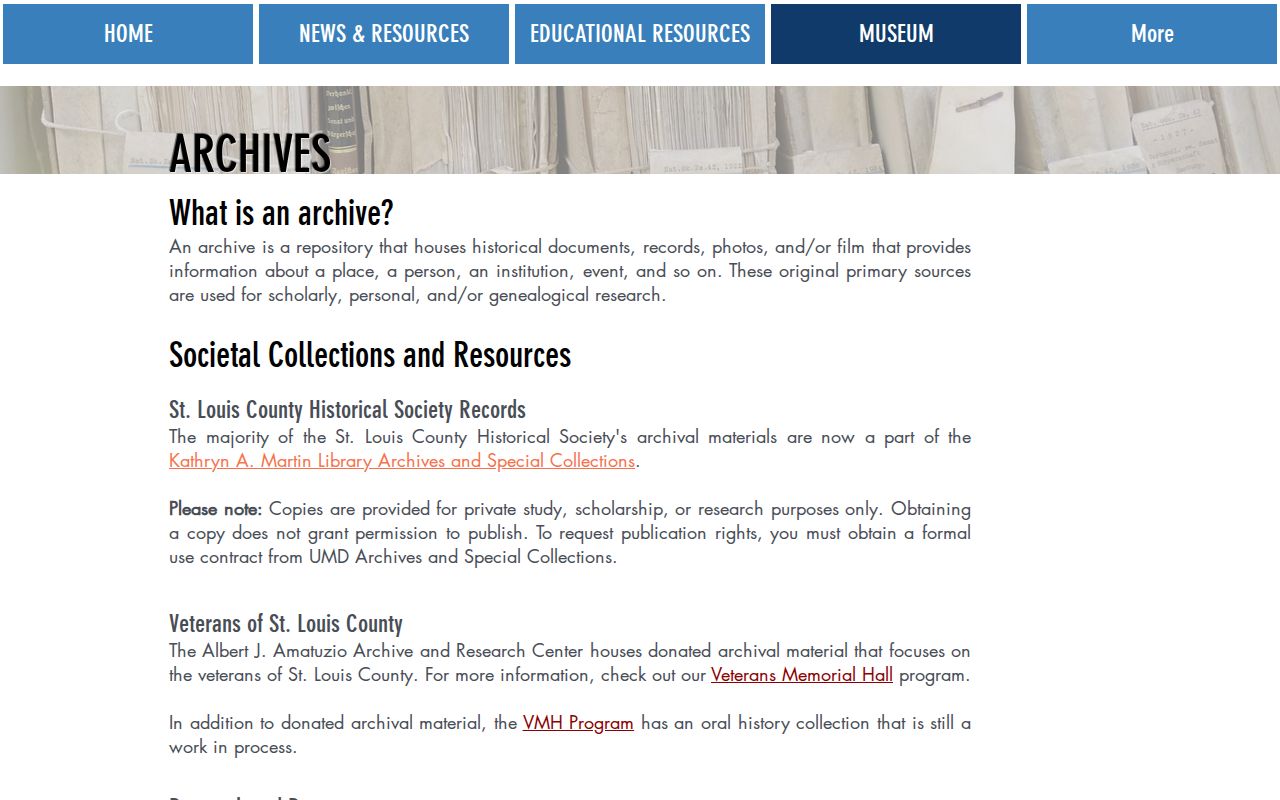
The archive route broadens the context around a dated listing without converting a photograph, oral history, or manuscript into an unverified household claim. Hold the directory citation and the archive citation as separate evidence. Duluth Public Library’s newspaper runs can serve a similar corroborating role.
Duluth House History Beside Directories
The UMD house-history guide describes directories roughly from 1882 through 2002, original volumes from 1882 through 1989, and street listings beginning in 1930. It points researchers toward the assessor, building safety files, clippings, Sanborn and Rascher maps, atlases, newspapers, UMD collections, and title research. That sequence tests a location across time, not a current person at a parcel.
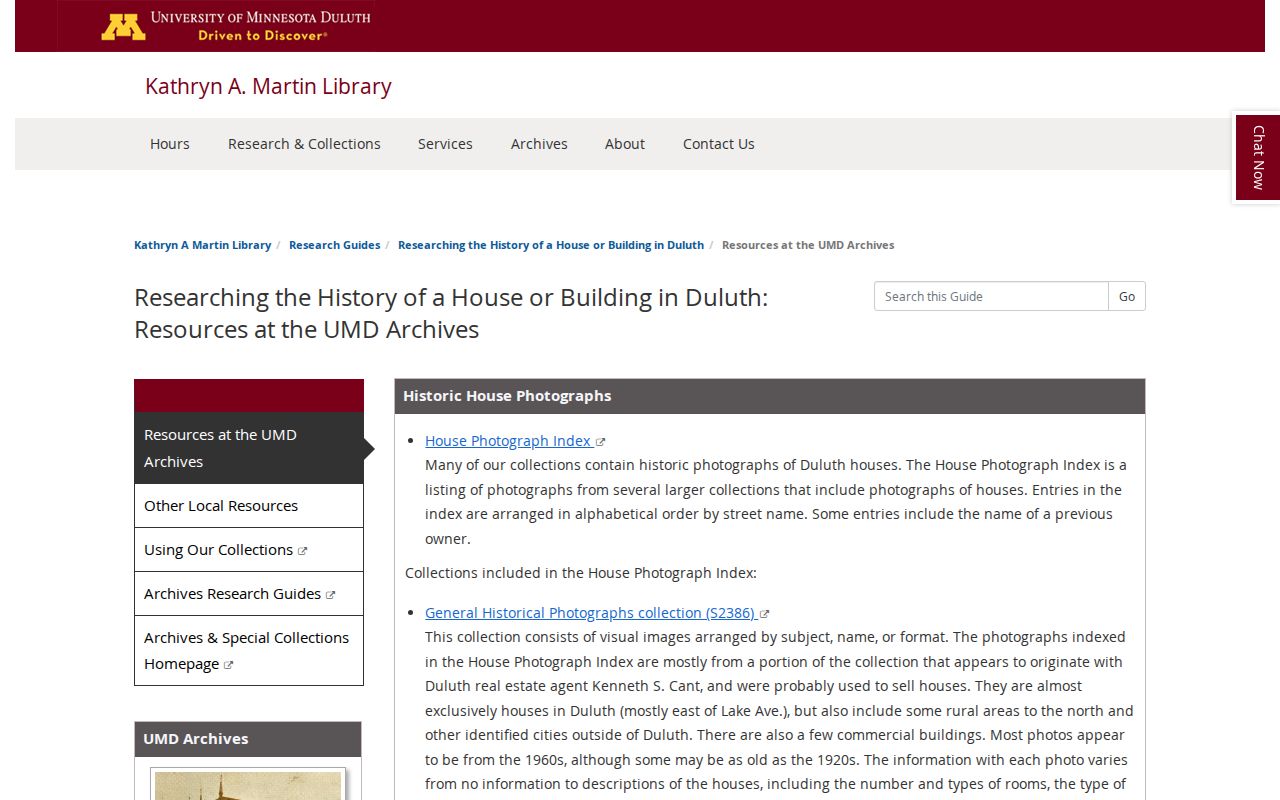
The guide helps explain why a directory address may differ from a current parcel address. It also keeps the line clear between a printed occupant, a property field, a permit applicant, and a recorded title role.
St. Louis County City Directory Citation Trail
Good historical work leaves a trail another reader can repeat: collection name, directory title, city, year, publisher, page or image, printed name, exact address if present, and access date for a digital copy. Add the source role beside each later record. A Sanborn sheet documents built context. A death index points to an event. Neither is the same kind of evidence as a city directory line.